
Key meeting during an audit engagement
- Isaac Omosa
- Jul 18, 2023
- 2 min read

Overall, meetings play a vital role in facilitating communication, collaboration, and understanding between the internal audit team and the auditees. They provide a platform for information exchange, clarification, and resolution of issues, ultimately enhancing the effectiveness and value of the internal audit process. Meetings play a crucial role during an internal audit process for several reasons:
Clarifying Objectives: Meetings provide an opportunity for the internal audit team to meet with management and key stakeholders to clearly understand the objectives of the audit. Through discussions, the auditors can gain insights into the organization's goals, processes, and risks, enabling them to tailor their audit approach accordingly.
Gathering Information: Meetings allow auditors to gather relevant information directly from individuals involved in the audited processes. Through interviews, discussions, and presentations, auditors can obtain firsthand knowledge, documentation, and evidence necessary to assess controls, identify gaps, and evaluate compliance with policies and procedures.
Verifying Findings: Meetings enable auditors to present their findings and observations to management and discuss any potential issues or concerns. This provides an opportunity for clarification, verification, and additional explanations, ensuring that the audit findings are accurate and well-supported.
Collaboration and Cooperation: Meetings facilitate collaboration between the internal audit team and the auditees. Through open and constructive discussions, auditors can build relationships, foster cooperation, and encourage the sharing of relevant information. This collaborative approach helps establish a positive working relationship, which can enhance the effectiveness and efficiency of the audit process.
Providing Recommendations: Meetings allow auditors to communicate their recommendations for improvement directly to management and relevant stakeholders. By discussing the recommendations in person, auditors can provide additional context, address any questions or concerns, and help management understand the rationale behind the recommendations. This promotes a more effective implementation of the audit recommendations.
Addressing Issues and Challenges: Meetings provide a platform to address any issues, challenges, or roadblocks encountered during the audit process. By discussing these matters in person, auditors and management can collectively identify solutions, develop action plans, and establish timelines for addressing the identified issues. This ensures that potential obstacles are promptly addressed and resolved.
Building Awareness and Understanding: Meetings contribute to raising awareness and understanding of the internal audit function within the organization. By engaging with management and stakeholders, auditors can explain the purpose, scope, and benefits of the audit process. This helps to demystify the audit function, foster support, and promote a positive perception of internal audit throughout the organization.
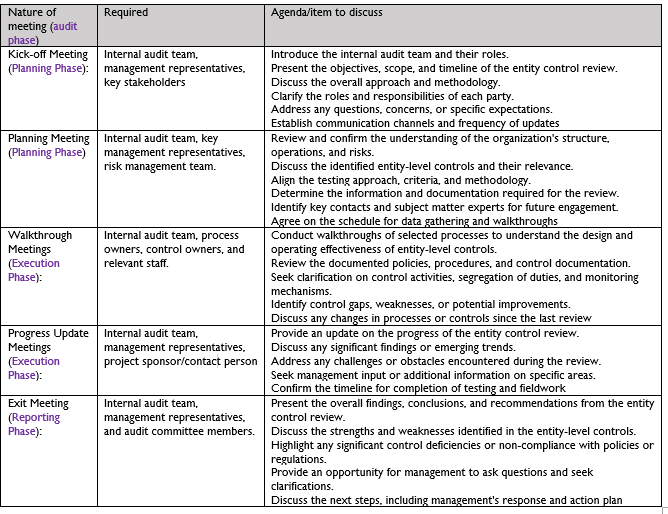
List of key meetings

Comments